Off-Market Properties in Pittsburgh: How Buyers Find Deals Before They Hit the MLS
Many buyers search the MLS, attend open houses, and set listing alerts. Those are useful tools, but they are not the only ways to find real estate. Off-market properties in Pittsburgh are homes or investment properties that are not being broadly marketed through a standard public listing at the time a buyer discovers them.
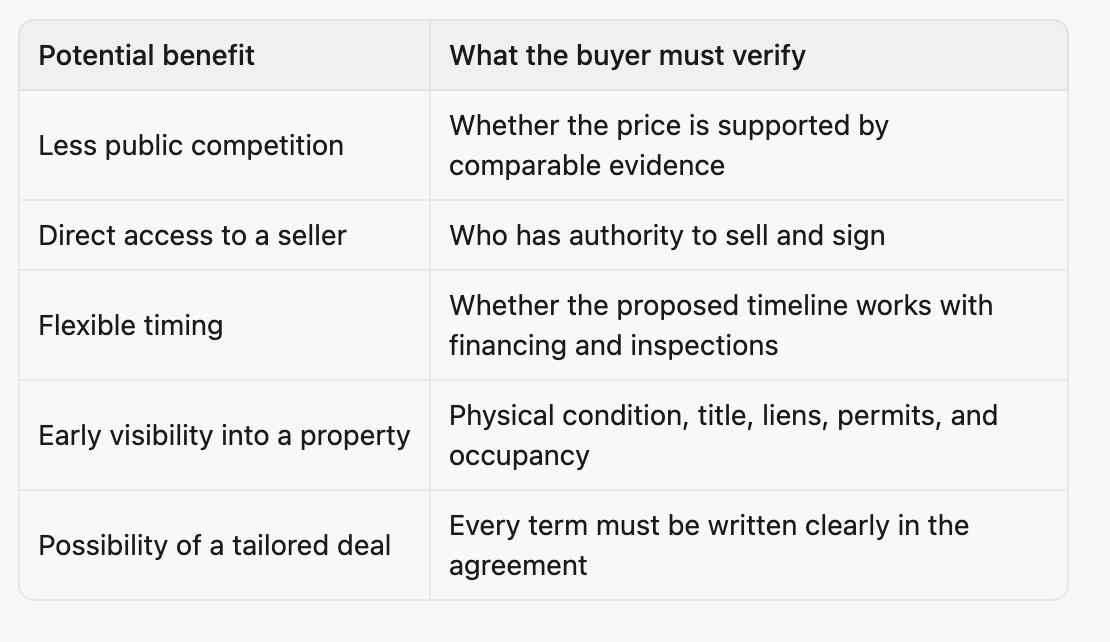
An off-market opportunity may come from a direct conversation with a homeowner, a local investor network, a property owner’s outreach, a professional referral, or a buyer who contacts a seller before a listing is created. The appeal is often privacy, flexibility, less public competition, or access to properties that need work. The trade-off is that buyers must do more independent verification because there may be less standardized listing information.
What “off-market” actually means
Off-market does not necessarily mean secret, distressed, or automatically below market value. It simply describes how the property is being marketed—or not marketed—at a particular moment. A homeowner may be testing interest privately. An investor may be selling a property directly. A seller may want to avoid public showings while deciding whether to move.
Some off-market properties are move-in ready. Others are fixer-uppers, inherited houses, vacant properties, rental investments, or homes with an unusual ownership or timing situation. The condition and transaction terms vary widely, so buyers should not treat the label itself as proof of a bargain.
How buyers find off-market Pittsburgh properties
The most reliable approach is to build relationships rather than wait for one listing. Buyers can tell local real estate professionals what they are seeking, connect with contractors and property managers, attend investor events, monitor public property information, and communicate with owners when outreach is lawful and respectful.
Another route is to work with local property buyers and investment companies that acquire homes and later offer properties for sale. Property Buyers Pittsburgh describes itself as a local real estate investment company serving sellers and investors, and it maintains a properties-for-sale page for available opportunities.
Buyers should remember that inventory changes. A property shown online may already be under contract or sold, and a company’s current process may change. Contact the company directly for current availability and terms.
Due diligence matters more when a property is off-market
An off-market purchase still deserves the same level of care as any other real estate transaction. Before making a serious offer, confirm the seller’s identity and authority, inspect the property, review comparable sales, verify zoning and permitted use, and order a title search through an appropriate settlement provider or title professional.
For an investment property, review rent rolls, leases, payment history, operating expenses, insurance, taxes, utility arrangements, code notices, and deferred maintenance. For a vacant or distressed house, pay special attention to water intrusion, structural movement, electrical hazards, environmental concerns, and signs of unauthorized entry.
Pennsylvania’s Real Estate Seller Disclosure Law generally addresses disclosure of known material defects in covered residential transfers and lists topics including structural problems, basements, utilities, HVAC, electrical systems, drainage, hazardous substances, and title or use issues. Buyers should not rely solely on a seller’s informal description. Ask questions in writing, obtain professional inspections, and discuss the transaction with qualified legal and real estate professionals.
How to evaluate an off-market deal
Start with the property’s likely value after accounting for condition and use. For a personal residence, consider comparable properties, needed improvements, neighborhood fit, insurance, taxes, and your financing. For an investment property, estimate realistic income and expenses rather than relying on optimistic projections.
A simple investment screen might include:
Estimated all-in cost = purchase price + closing costs + immediate repairs + planned improvements + carrying costs.
Estimated project margin = expected stabilized value or resale price − estimated all-in cost.
The result is only a screening tool. It does not account for every risk, and it is not a formal appraisal or investment recommendation. Have an experienced professional review significant transactions.
Questions to ask before making an offer
Ask why the seller is selling, what is included, whether anyone occupies the property, and whether there are known disputes, liens, code violations, or unpaid taxes. Confirm the expected closing date and whether the seller needs a leaseback, delayed possession, or time to remove personal property.
You should also ask how the asking price was determined. A direct sale can be efficient, but efficiency should not replace valuation. Request access to the property, use an inspection contingency when appropriate, and make sure the agreement identifies the property precisely and states the obligations of each party.
Off-market does not mean “no paperwork”
The private nature of an off-market deal may reduce advertising, but it does not remove the need for a written agreement, title work, settlement coordination, disclosures where applicable, and careful handling of funds. Buyers should be cautious about pressure to skip inspections, wire money without verification, or sign an incomplete document.
A reputable transaction should make it possible for both sides to understand the price, timeline, contingencies, closing costs, possession terms, and remedies if a party cannot perform. If the deal involves multiple owners, an estate, a trust, a business entity, or a title concern, obtain professional advice before proceeding.
How sellers can use an off-market strategy
Off-market selling can give a Pittsburgh homeowner a private way to test interest without staging the home for public showings. It may appeal to an owner of a rental, vacant house, inherited property, or home that needs work. The seller can discuss the property directly, compare terms, and decide whether a private sale fits the situation.
Privacy should not be confused with secrecy. Sellers should communicate material facts accurately, verify the buyer’s ability to close, and review the agreement with an attorney or settlement professional when appropriate. A direct offer can be convenient, but it should still be evaluated against the seller’s timeline and expected net proceeds.
Find Pittsburgh property opportunities through a local source
Property Buyers Pittsburgh states that it works with sellers and investors and offers properties in the Pittsburgh area. Buyers can review the company’s current properties, while homeowners can learn about the direct-sale process.
The best off-market opportunities are not defined by a catchy label. They are defined by clear information, realistic pricing, verified ownership, appropriate due diligence, and terms that work for both parties. Approach each opportunity with curiosity—but also with the same discipline you would bring to any important real estate purchase.