How to Sell a House As-Is in Pittsburgh: A Practical Seller’s Guide
A house does not have to be freshly renovated to be sold. In Pittsburgh, homeowners may need to sell an older property, inherited house, rental, vacant home, or fixer-upper without investing thousands of dollars in repairs first. That is where an as-is home sale can become a practical option.
Selling as-is does not mean ignoring the property’s condition. It means setting expectations clearly: the buyer evaluates the home in its present state, and the seller is not promising to complete a list of improvements before closing. The process can reduce preparation work, but it still requires honest communication, sensible documentation, and a contract you understand.
What does selling a house as-is mean?
In a typical as-is transaction, the buyer agrees to purchase the property in its current physical condition. The buyer may account for repairs, updates, cleanout, or maintenance in the price and terms. Depending on the buyer and agreement, the buyer may still perform inspections, verify title, and confirm that the transaction can close.
“As-is” is not a magic phrase that eliminates every seller obligation. Pennsylvania generally requires sellers to disclose known material defects in residential transfers before the agreement of transfer is signed, subject to statutory exceptions. When completing a disclosure, sellers have an affirmative duty not to make representations they know—or have reason to know—are false, deceptive, or misleading, and not to fail to disclose a known material defect.
If you are unsure how the law applies to your property, speak with a Pennsylvania real estate attorney. This article is educational and is not a substitute for legal advice.
Which Pittsburgh properties may benefit from an as-is sale?
An as-is approach can be relevant to many situations. A property may need a new roof, electrical updates, plumbing work, basement remediation, cosmetic improvements, or extensive cleaning. You may also be dealing with a house that has been vacant, a rental with an expiring lease, a property received through an estate, or a home that no longer fits your finances or plans.
The reason matters because it affects the information you should gather and the timeline you need. For example, an inherited property may require coordination among multiple beneficiaries, while a tenant-occupied property may require lease and access information. A vacant home may require attention to security, utilities, insurance, and winterization.
A five-step plan for selling your Pittsburgh house as-is
1. Make a realistic condition summary
Walk through the property and record the major systems and visible issues. Note the age or condition of the roof, furnace, air conditioning, water heater, electrical panel, plumbing, windows, foundation, basement, and exterior. Take dated photographs for your own records. You do not need to diagnose every issue; you do need a clear starting point.
2. Collect essential documents
Gather the deed if available, mortgage or payoff information, tax notices, insurance details, utility information, leases, surveys, permits, contractor invoices, and estate documents when applicable. If you do not have every document, say so early. Missing paperwork does not always prevent a sale, but discovering a title or ownership issue late can create delays.
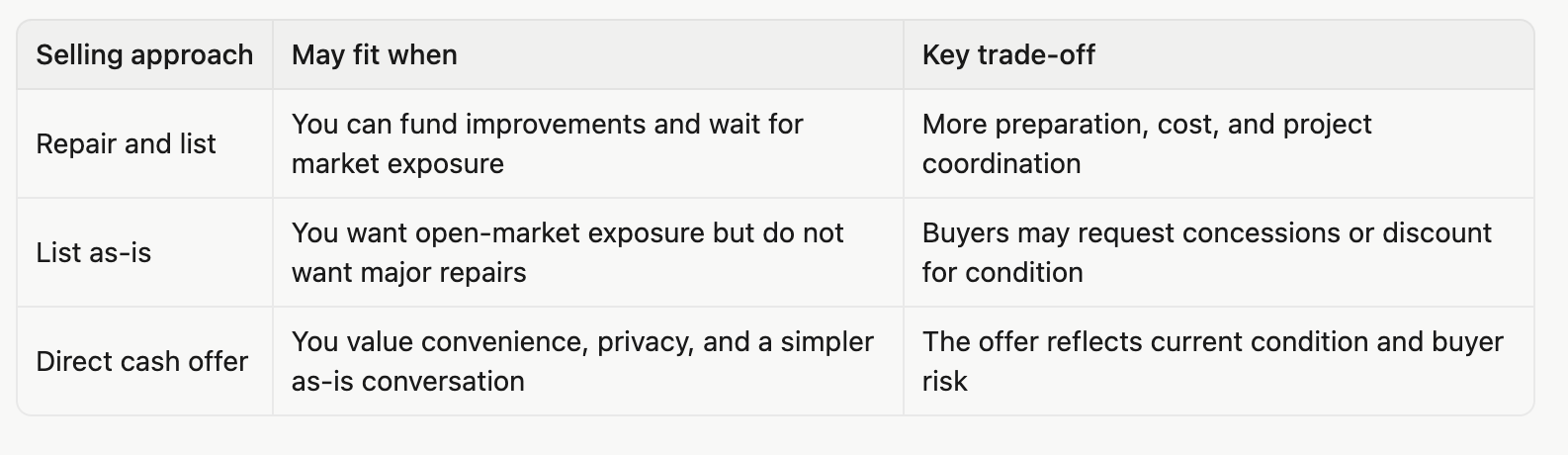
3. Decide whether to repair, list, or request a direct offer
Use the property’s condition and your priorities to compare options. A repair-heavy house may be difficult to prepare for traditional marketing without significant cash and project management. A direct buyer may be willing to evaluate the property as it stands. Property Buyers Pittsburgh states that it buys Pittsburgh-area homes as-is and offers a process that includes property review, market analysis, an offer, and closing after acceptance.
4. Compare the complete economics
An as-is offer should not be evaluated by price alone. Estimate the costs you would otherwise incur: demolition, hauling, contractor work, permits, utilities, insurance, lawn care, taxes, mortgage payments, commissions, and the time required to manage the project. Then compare the likely net proceeds and timeline for each option.
A simple comparison can help:
Expected net from listing = anticipated sale price − repairs − carrying costs − selling expenses − concessions.
Expected net from direct sale = agreed purchase price − seller-paid costs stated in the agreement.
These are planning formulas, not appraisals. Actual numbers depend on the property, contract, local conditions, and closing statement.
5. Review the agreement before you sign
Confirm the purchase price, deposit, inspection or due-diligence terms, closing date, title requirements, included items, possession date, and responsibility for settlement expenses. Ask what could cause the buyer to cancel or renegotiate. If the agreement is unclear, get independent legal advice before signing.
Should you clean an as-is property before selling?
You do not necessarily need to renovate, stage, or deep-clean a property for a direct as-is evaluation. Still, basic organization can make communication easier. Remove hazardous materials when possible, secure animals, identify active leaks, keep walkways accessible, and provide keys or access instructions. If the home contains large amounts of personal property or debris, disclose that fact so the buyer can evaluate the cleanout accurately.
The goal is not to make the house look perfect. The goal is to make the condition understandable and the property safe to inspect.
Common mistakes Pittsburgh sellers should avoid
One mistake is spending money on improvements without first estimating whether the work will be recovered in the final sale. Another is choosing a buyer solely because of a high initial number, without reviewing contingencies, fees, and the circumstances under which the price could change.
Sellers should also avoid hiding known issues. Pennsylvania’s disclosure law covers a range of property conditions, and disclosure obligations should be taken seriously. Finally, do not assume every “cash buyer” follows the same process. Ask who will be purchasing the property, how the valuation was prepared, and whether the buyer has experience closing transactions like yours.
Explore an as-is sale for your Pittsburgh property
If you want to discuss a house that needs repairs, cleaning, or updates, Property Buyers Pittsburgh’s seller page explains its as-is home-buying approach. You can also contact the local team to share the property address and your preferred timeline.
Whether you sell directly or choose another route, start with accurate information and a clear understanding of the agreement. An as-is sale can be a useful way to avoid taking on a renovation project—but the best outcome comes from matching the process to your finances, timeline, and responsibilities as a seller.